
Points System

Penalties:
- Advantages: Half point – Given for almost scoring points in a position but not quite completing the action.
- Penalties: Deducted for rule violations, stalling, or actions deemed unsportsmanlike. Penalties can result in point deductions or disqualification.
Submission:
- Submitting an Opponent: Instant win achieved by forcing your opponent to tap out due to a joint lock or chokehold.
- Technical Submission: Forcing your opponent to submit due to injury or potential harm.
Decision:
- If there is no submission during the time limit, the match may be decided by points, advantages, penalties, or referee’s decision in case of a tie.
Ippon (Full Point)
An ippon is the highest score awarded in Judo, signifying a complete and decisive victory.
Criteria:
Successfully executing a technique with speed, power, control, and precision.
Demonstrating clear dominance and decisiveness over the opponent.
An ippon immediately ends the match, declaring the scorer as the winner.
Waza-ari (Half Point)
A waza-ari is a lower score compared to ippon but still significant in determining the match outcome.
Criteria:
Executing a technique that displays control, impact, and scoring potential, but falls short of an ippon.
Two waza-aris are equivalent to an ippon, resulting in a win.
Yuko (Quarter Point)
Yuko is a lower score awarded for techniques that show some control and advantage but less than a waza-ari.
Criteria:
Demonstrating some degree of control over the opponent with a successful technique.
Several yukos may accumulate to equal a higher score, influencing the match outcome.
Koka
Koka is the lowest score in Judo, generally awarded for techniques that demonstrate some initiative but lack the impact or control of higher-scoring actions.
Criteria:
Showing effort, attack, or technique execution, albeit with less authority or effect.
While not as impactful as higher scores, kokas can contribute to the overall assessment of a match.
Combinations and Strategic Scores
Combining techniques or transitioning between techniques effectively can lead to higher scoring outcomes.
Strategic scoring involves setting up opponents, varying attacks, and adapting techniques to maximize scoring potential.
Understanding the nuances of different judo techniques and their scoring values is essential for competitors to earn points effectively.

- Takedowns – Points are awarded for successful takedowns where one fighter brings the other to the ground with control and technique.
- Throws – Fighters scoring points for executing effective throws, similar to Judo techniques, showcasing mastery and control.
- Pins – Points are given for holding an opponent down on the mat in a pinning position for a specified duration, demonstrating dominance.
- Joint Locks and Chokes – Submission techniques such as joint locks and chokes that lead the opponent to tap out can earn points.
- Advantages – Partial points are awarded for achieving positions of dominance, near successful techniques, or other advantageous situations.
- Penalties – Deductions can occur for rule violations, stalling, unsportsmanlike behavior, or other infractions.
- Round Durations – Matches consist of rounds with specific time limits, where fighters aim to score points or secure submissions.
- Decisions – Matches can be decided by points accumulated, submissions achieved, or referee decisions based on performance.
- Technical Superiority – A fighter may win by technical superiority if they establish a significant point lead over their opponent during the match.
- Submissions – Winning by forcing an opponent to submit through joint locks, chokes, or other submission techniques.
- Knockouts – While rare in Sambo, knockouts can lead to an immediate victory when a fighter incapacitates their opponent through striking or other means.
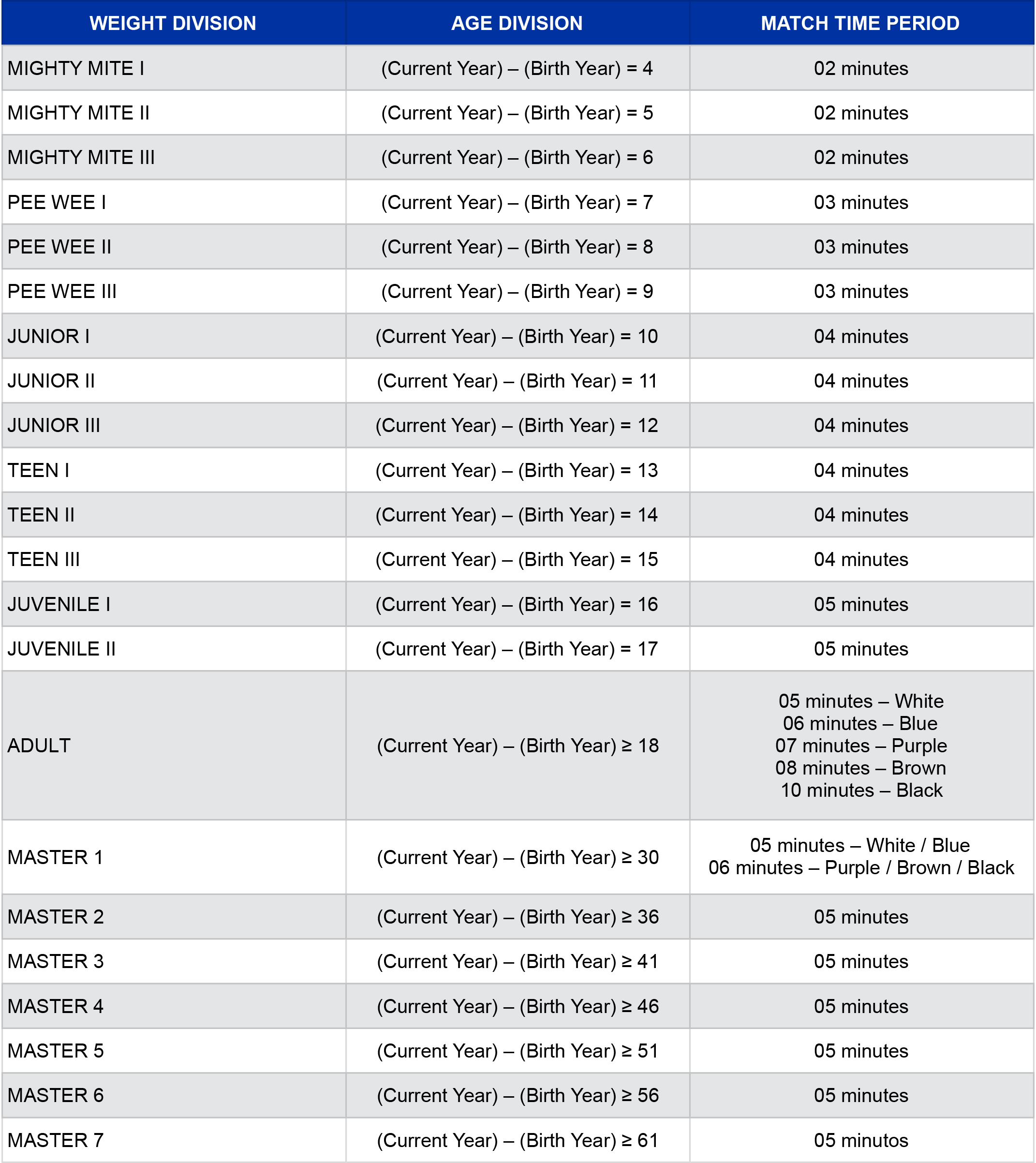
MATCH DURATION
Penalties:
- Advantages: Half point – Given for almost scoring points in a position but not quite completing the action.
- Penalties: Deducted for rule violations, stalling, or actions deemed unsportsmanlike. Penalties can result in point deductions or disqualification.
Submission:
- Submitting an Opponent: Instant win achieved by forcing your opponent to tap out due to a joint lock or chokehold.
- Technical Submission: Forcing your opponent to submit due to injury or potential harm.
Decision:
- If there is no submission during the time limit, the match may be decided by points, advantages, penalties, or referee’s decision in case of a tie.
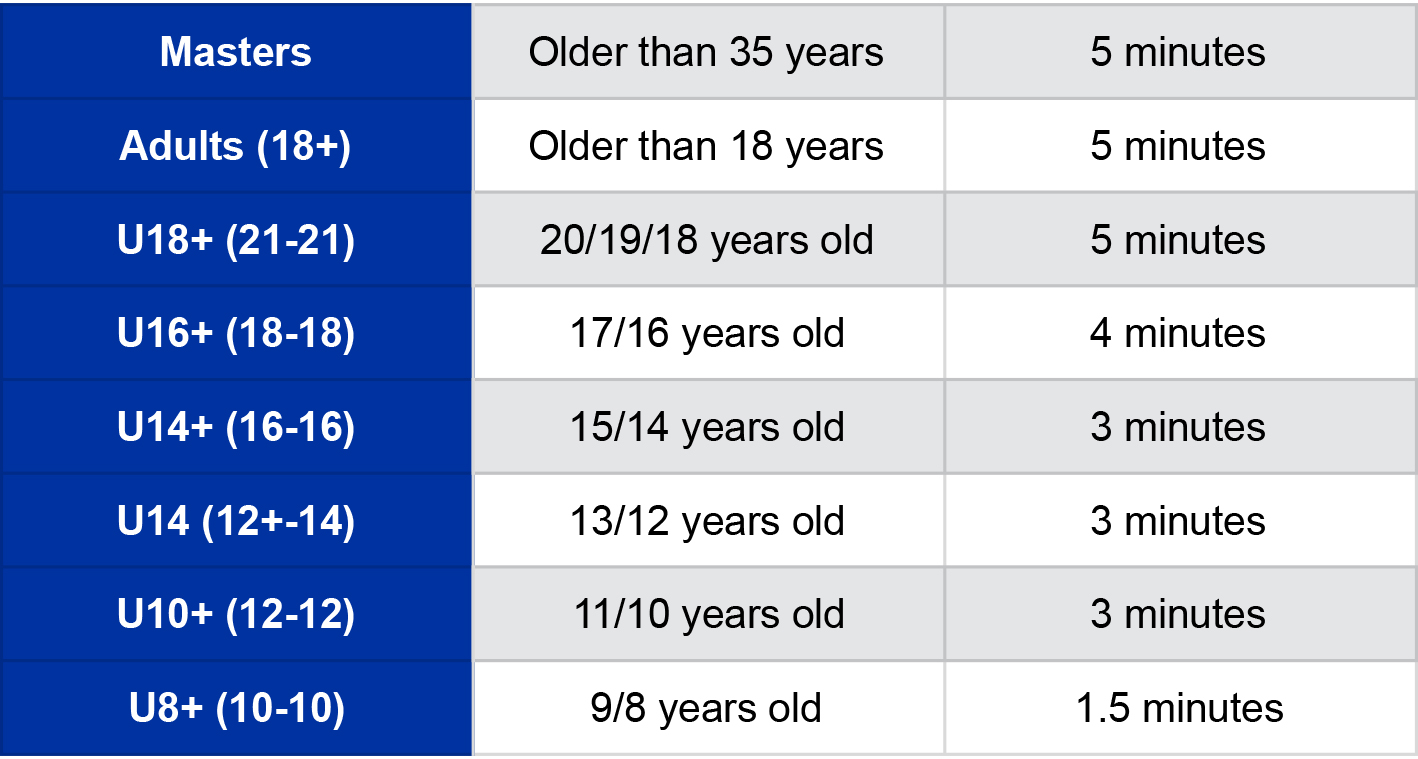
WORLD CHAMPIONSHIP
QUALIFYING ROUNDS = 10 mins / with 5 mins overtime if it’s a draw. (Max. 1 overtime)
- First 5 mins no points
- Second 5 mins with points (negative and positive points)
- Overtime 5 mins (negative and positive points).
FINALS, ABSOLUTE FINALS & SUPERFIGHT = 20 mins / with 10 mins overtime if it’s a draw. (Max. 2 overtimes)
- First 10 mins no positive points (only negative points will be counted)
- Second 10 mins with points (negative and positive points)
- Overtimes 10 mins (negative and positive points)
TRIALS (QUALIFIERS)
QUALIFYING ROUNDS = 6 mins / with 3 mins overtime if it’s a draw. (Max. 1 overtime)
- First 3 mins no points
- Second 3 mins with points (negative and positive points)
- Overtime 3 mins (negative and positive points).
FINALS = 8 mins / with 4 mins overtime if it’s a draw. (Max. 1 overtime)
- First 4 mins no positive points (only negative points will be counted)
- Second 4 mins with points (negative and positive points)
- Overtime 4 mins (negative and positive points)
NATIONAL & OPEN CHAMPIONSHIPS
QUALIFYING ROUNDS = 6 mins / with 3 mins overtime if it’s a draw. (Max. 1 overtime)
- First 3 mins no points
- Second 3 mins with points (negative and positive points)
- Overtime 3 mins (negative and positive points).
FINALS = 8 mins / with 4 mins overtime if it’s a draw. (Max. 1 overtime)
- First 4 mins no positive points (only negative points will be counted)
- Second 4 mins with points (negative and positive points)
- Overtime 4 mins (negative and positive points)
What to Expect at Your First Tournament
Are you gearing up for your first jiu-jitsu tournament but feeling uncertain about what lies ahead?
Participating in your first Jiu-Jitsu tournament can be an exhilarating yet daunting experience. Expect a well-organized event featuring a mix of competitors across various skill levels.
- Familiarize yourself with the schedule, as matches typically follow a strict timeline.
- Arrive early to allow time for registration and warm-ups.
- Understand the rules and etiquette, including uniform requirements and match conduct.
- Mental preparation is key; anticipate a range of emotions from excitement to nervousness.
- Remember to stay hydrated and nourished, and maintain a positive mindset.
Ultimately, view this experience as an opportunity for growth, learning, and camaraderie within the Jiu-Jitsu community.
Preparing Physically for Competition Day
Athletes should focus on developing strength, endurance, and flexibility through a structured training regimen.
Mental Preparation for Jiu-Jitsu Matches
Visualization
Mentally rehearse your techniques, strategies, and reactions to various scenarios that may occur during a match. Visualizing successful outcomes can boost confidence and help prepare you for competition.
Positive Self-Talk
Use affirmations and positive self-talk to boost confidence and maintain a resilient mindset. Replace negative thoughts with constructive and motivating statements to stay focused and optimistic.
Breathing Exercises
Practice deep breathing exercises, such as diaphragmatic breathing, to calm nerves, reduce anxiety, and improve focus. Controlled breathing can help regulate emotions and maintain composure during matches.
Pre-Match Routine
Establish a consistent pre-match routine that includes mental and physical preparation, such as visualization, warm-up drills, and focusing exercises. Routine helps create a sense of familiarity and readiness before competing.
Focus on the Present Moment
Stay present during your matches by focusing on the current moment and the task at hand. Avoid getting distracted by past mistakes or future outcomes, and concentrate on executing your techniques effectively.
Set Realistic Goals
Establish achievable short-term and long-term goals for your matches. Setting specific, measurable, and realistic objectives can help motivate you, track progress, and maintain a sense of purpose during competitions.
Mental Rehearsal
Practice mental rehearsal by visualizing yourself performing well in challenging situations. Imagine overcoming obstacles, staying composed under pressure, and executing successful techniques to build mental resilience and confidence.
Stay Calm Under Pressure
Develop strategies to manage stress and stay calm during intense moments in matches. Utilize techniques such as mindfulness, progressive muscle relaxation, or visualization to control emotions and maintain focus.
Learn from Setbacks
Embrace failures and setbacks as learning opportunities to grow and improve. Analyze mistakes objectively, focus on areas for development, and use feedback constructively to enhance your performance in future matches.
Post-Match Reflection
Reflect on your performance after matches to identify strengths, weaknesses, and areas for improvement. Celebrate successes, learn from experiences, and set new goals to continue developing your mental preparedness for future competitions.
Incorporating these mental preparation techniques into your jiu-jitsu training routine can help enhance your focus, confidence, resilience, and overall performance during matches. Consistent practice and application of these strategies can contribute to improved mental toughness and competitive mindset in the sport.
Essential Gear and Equipment You Need
Gi (Kimono)
A traditional uniform used in most jiu-jitsu classes. It typically consists of a jacket, pants, and belt.
No-Gi Attire
Rash guards and grappling shorts are commonly worn for no-gi jiu-jitsu training sessions. These provide comfort, mobility, and help prevent skin irritation.
Belt
A colored belt that signifies your rank in jiu-jitsu. Beginners usually start with a white belt and progress through different colors as they advance.
Mouthguard
Protects your teeth and mouth during training and sparring sessions, especially during intense rolling sessions.
Protective Gear
- Knee Pads and Elbow Pads: Offer protection for your joints during takedowns and groundwork.
- Ear Guards (Cauliflower Ear Protectors): Help prevent cauliflower ear, a common jiu-jitsu injury caused by repeated trauma to the ear.
Athletic Tape
Useful for taping fingers, joints, or other areas that need additional support or protection.
Water Bottle
Staying hydrated is crucial during training sessions, so having a water bottle on hand is essential.
Gym Bag
A spacious bag to carry all your gear, clothing, water bottle, and other essentials to and from training sessions.
First Aid Kit
Basic supplies for treating minor injuries such as cuts, scrapes, or bruises that may occur during training.
Grappling Dummy
Optional but can be helpful for solo drilling and practicing techniques outside of class.
Towel and Personal Hygiene Items
Keep a towel to wipe off sweat and personal hygiene items like soap, shampoo, and deodorant for post-training showers.
Notebook and Pen
Useful for jotting down notes, techniques, or feedback from instructors to review and improve your jiu-jitsu skills.
Having the right gear and equipment is essential for a safe and effective jiu-jitsu training experience. Make sure to invest in quality gear that fits well and provides the necessary protection while allowing for freedom of movement during training sessions.
Rules and Regulations of Jiu-Jitsu Competitions
Scoring System
Points are awarded for achieving dominant positions, takedowns, sweeps, and submission attempts. Familiarize yourself with the point system used in competitions.
Weight Classes
Competitors are grouped into weight classes to ensure fair competition. Make sure to register for the appropriate weight division based on your weight at the time of the competition.
Time Limits
Matches are typically timed, with different durations for different belt levels and age groups. Understand the time limit for your matches and be prepared to pace yourself accordingly.
Legal Techniques
Each competition may have specific rules regarding legal techniques and submissions. Study the ruleset of the competition you’re entering to ensure you are aware of allowed and prohibited moves.
Gi and No-Gi Divisions
Competitions may offer both gi (with traditional uniform) and no-gi (without traditional uniform) divisions. Decide which division you want to compete in and prepare accordingly.
Guard Pulling
Be aware of the rules regarding guard pulling. Some competitions penalize guard pulling without a valid attempt at a submission or sweep.
Takedown Rules
Understand the regulations for takedowns. Points may be awarded for successful takedowns, so practice your takedown techniques to score points or establish dominant positions.
Submissions
Know the rules regarding submissions. Some competitions may have restrictions on certain types of submissions, such as neck cranks, heel hooks, or certain leg locks depending on the belt level.
Behavior and Attire
Follow etiquette and sportsmanship rules during matches. This includes respecting opponents and referees, wearing appropriate attire, and maintaining a positive attitude on and off the mats.
Medical Checks
Be prepared for any pre-competition medical checks or paperwork required by the event organizers. Ensure you are in good health and ready to compete safely.
Weight Cutting Rules
Some competitions have rules and restrictions on weight cutting practices to ensure the safety and well-being of competitors. Familiarize yourself with any weight-cutting regulations in place.
Coaching
Understand the rules regarding coaching during matches. Some competitions allow coaching from the sidelines, while others may have specific guidelines for when and how coaching is permitted.
It’s important for beginners to thoroughly review the rules and regulations of the specific jiu-jitsu competition they are entering to ensure compliance and a smooth competition experience. Take the time to understand the rules, practice techniques within the guidelines, and approach competitions with a positive and sportsmanlike attitude.
Tips for Weight Cutting Safely
Plan Ahead
Start your weight-cutting process well in advance of the competition date to allow for gradual and sustainable weight loss.
Healthy Diet
Focus on a balanced and nutritious diet rich in lean proteins, complex carbohydrates, and healthy fats. Avoid crash diets or extreme restrictions that can negatively impact your performance.
Stay Hydrated
Maintain proper hydration levels throughout the weight-cutting process. Dehydration can lead to decreased performance and health risks.
Monitor Weight
Regularly monitor your weight leading up to the competition. Keep track of your progress and adjust your weight-cutting strategies as needed to stay on track.
Gradual Weight Loss
Aim for gradual weight loss of 1-2 pounds per week to avoid drastic changes that can be harmful to your health and performance.
Balanced Caloric Deficit
Create a moderate caloric deficit by adjusting your food intake and increasing physical activity. Consult with a nutritionist or coach for guidance on creating a safe and effective plan.
Avoid Extreme Measures
Steer clear of extreme weight-cutting methods such as sauna suits, excessive sweating, or severe calorie restriction. These can be dangerous and lead to adverse health effects.
Quality Sleep
Prioritize adequate sleep and rest to support recovery and overall well-being during the weight-cutting process.
Short-Term Strategies
Consider short-term weight-cutting strategies closer to the competition, such as reducing sodium intake, manipulating carbohydrate intake, or adjusting fluid levels.
Rehydration Plan
Have a structured plan for rehydration after weigh-ins to replenish lost fluids and electrolytes. Focus on hydrating with water and electrolyte-rich fluids.
Consult Professionals
Seek advice from a nutritionist, fitness coach, or healthcare provider experienced in weight cutting to ensure you are following a safe and effective plan.
Listen to Your Body
Pay attention to your body’s cues and adjust your weight-cutting strategies accordingly. If you experience concerning symptoms or feel unwell, seek medical attention immediately.
Competition-Specific Rules:
Familiarize yourself with the weight-cutting rules and regulations of the jiu-jitsu competition you are entering to ensure compliance and avoid any disqualifications.
Post-Competition Recovery
After the competition, focus on proper recovery with nutritious meals, hydration, and rest to support your body’s recovery and replenish energy stores.
Weight cutting should be approached with caution and prioritize your health and well-being above all else. By following these tips and planning ahead, you can cut weight safely and effectively while maintaining your performance and physical health for jiu-jitsu competitions.
Post-Match Reflection and Learning
Reflect on your performance after each match to identify areas for improvement, celebrate successes, and learn from experiences. Use feedback to adjust your training and strategies for future competitions.
By incorporating these strategies into your competition preparation and approach, you can enhance your performance, increase your chances of success, and compete effectively in jiu-jitsu competitions. Remember to stay focused, stay composed, and execute your techniques with confidence and determination.
View the rulebooks for the corresponding competition rules by clicking on the images.
ADCC Submission Fighting

International Brazilian Jiu-Jitsu Federation
